Today’s blog post will bring an end to the “Technology in the Workplace” series, but the technology piece will continue for at least two more weeks where I’ll attempt to bring some attention to how technology affects the way society learns and communicates.
There’s really just so much that can be addressed, regarding technology. But since my blog isn’t a technology blog and I’m not an expert (by any means) on technology subjects, I’ll just stay in my lane.
And my lane brings me to the effects I’ve witnessed technology create in the world in which we live. I’ve observed over the years and been a first-hand participant in interacting with, being influenced by, and developing relationships with technology. So, I speak (or type, in this case) from my real-life experiences.
I think I’ll take a few moments to mention some items that are carry-overs from last week’s discussion in The Art of People Business – Technology in the Workplace (Part 2) installment.
To recap, I mentioned three different efficiencies that technology has brought into the workplace. Technology can:
- save time
- save money, and
- provide conveniences.
Initially, let’s just focus on the first two resources on the list: TIME and MONEY . . .
. . . two commodities that are highly valuable and easily spent. It’s possible to recapture money but you can never recapture time. Once you spend time, you can never regain it back. So, anything you can do to save people from wasting time or incurring huge opportunity costs for expending time will pay big-time dividends to you and the person on the other end benefiting from it.
And the same holds true for money, while we’re talking about it. Measures to save money, especially in the workplace, are always sought after and many times rewarded. And because time and money are so closely intertwined, one tends to affect the other.
In other words, the positive correlation between the two is very strong. When you save time, you tend to save money and vice versa, which is why technology is overwhelmingly heralded as a superhero by employers who seek to increase profits, cut costs, and keep their businesses competitive in the market. But what about the employees?
Well, employees want all those same things like increasing profits, cutting costs, and keeping their workplace competitive in the market, but not at their expense. Employees want to keep their jobs (unless they don’t), but most do. And while technology can make life easier for them by freeing up some of their time on labor intensive tasks to do other things, technology is essentially replacing some of the work the employees used to do.
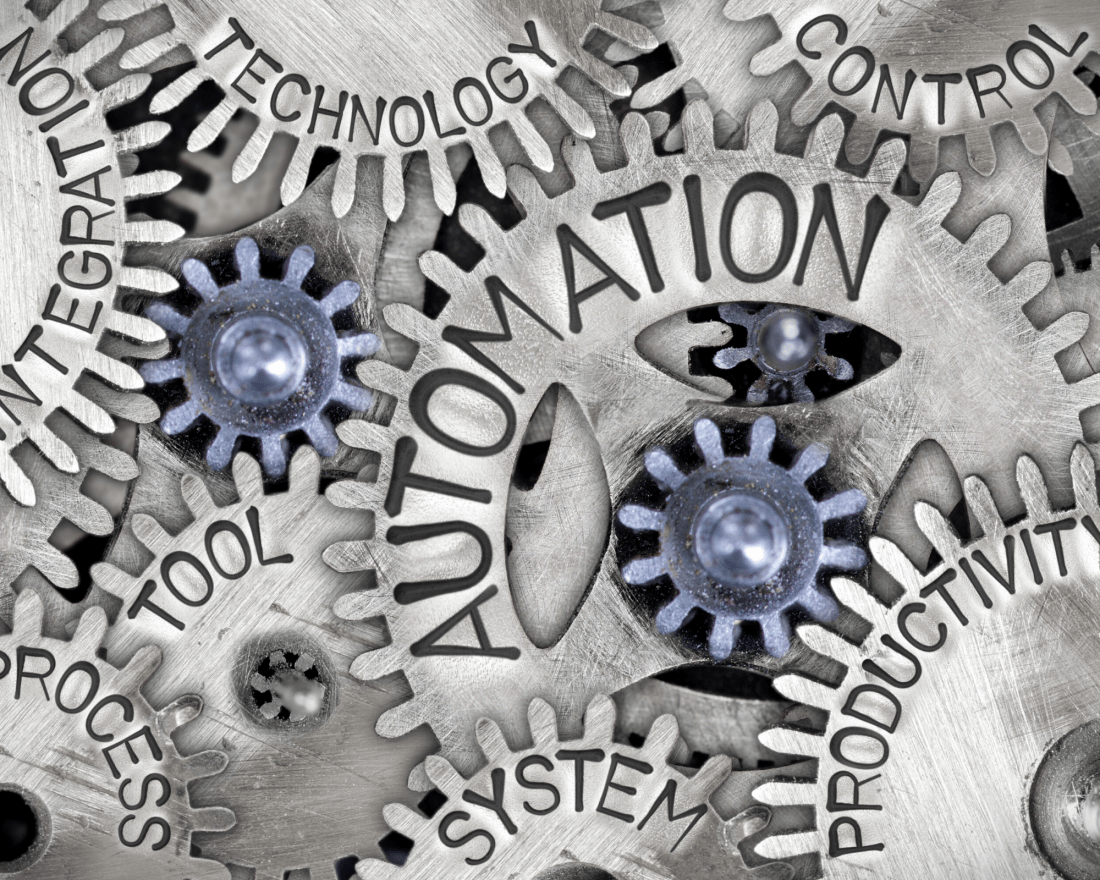
And as more and more tasks are taken over by automation, where does the employee fit in? I would guess that an employer’s cost savings in time and money doesn’t matter as much to an employee who was just delivered a pink slip.
Last week, I mentioned specific examples where technology has saved employers time and money, such as in:
- cutting labor costs when you don’t have as many employees but can still get the work done as if you have the maximum amount of employees to do the job.
- performing processes that are easy to replicate with consistency in application and speed of delivery.
- incurring no costs for training, wages, or salaries.
- incurring no costs for benefits such as medical/dental/vision/life insurance, worker’s comp for employees hurt on the job, paid leave for sick and personal use, FMLA for medical procedures or medical conditions for the employee or employee’s covered family member, and short-term or long-term disability when employees are unable to work regular work schedules due to medical conditions.
- negating the need to manage employee relations issues such as misconduct, tardiness, failing to meet job duties, use of illegal substances, insubordination to management, discriminatory acts, harassment, theft, falsifying information, and negligence in safety and regulatory measures.
Now, I want to follow up time and money with discussing the important impact that technology plays in the area of conveniences created.
Last week, I mentioned personal examples of conveniences brought about by technology such as:
- going through the self-check-out line instead of waiting for the next available cashier, especially if I just had a handful of items to purchase.
- going to the ATM to withdraw or deposit money instead of going through the bank drive-thru or to the teller’s counter, when I had a simple, “no-frills required”, “no help needed” type of transaction.
- going to a self-serve gas pump to put gas in my car instead of going to a full-service gas station, especially when I don’t need any full service items to be conducted.
Is it just me, or does it seem like people, in general, are striving to take the human element more and more out of the little things we do on an individualized work level as well? And here’s what I mean.
As I stated before, if there’s any easier way to do something, why not do it that way. Right? I mean working smarter not harder is the mantra for the times. Why be so manual when we can operate in the automatic? For instance, doing the up-front work to set up a spreadsheet, performing repetitive calculations done on a continuous basis, would be so convenient instead of hand-calculating those same formulas every time.
And having a copier that will collate your multi-page documents and staple them is so much quicker and less labor-intensive than separating your papers into ordered stacks and then hand-stapling the individual stacks together.
I could go on and on with the examples, but I think you get the picture. We like short-cuts in our work . . . the short-cuts that save wear and tear on the mind and body. So, what’s the problem with a little technology here and there if it helps us out?
There’s absolutely no argument when it comes to technology’s beneficial contributions to the workplace. But again, the vantage point in which you view technology can play a big part in determining whether the positives to technology outweigh the negatives.
Last week, I talked a little bit about those negatives as well. I addressed the . . .
- financial hardships that can be brought on the family unit.
- dwindling of purchasing power and the lack of putting money back into the community.
- difficulty people may face when they’re forced to find new trades and professions in areas they have no expertise or real interest in or incur costs to go back to school or receive skills training.
- lack of human touch leading to less of a customer service focus.
- issue of increasing crime when out-of-work individuals lack access to monetary means.
Nevertheless, some of the best have been technology’s strongest supporters, until the technology helped him or her right out of a job. But technology doesn’t have to be looked at as the big bad wolf out to huff and puff your house down.
Why is technology the bad guy . . . the fall guy . . . the lone wolf with some people? After all, there had to be some human who designed the technology that’s replacing other humans.
And . . .
. . . that probably means there’s a human needed to start the technology, make sure it’s running properly, and repair the technology when it needs maintenance. So, let’s not get it twisted here. Where there’s technology, there’s a human being stationed at its helm.
So, do we blame the machines for taking over or the men and women who create them? Or, do we blame anybody at all? After all, machines have made life easier for us humans in innumerable ways. And yet, they keep replacing us.
What is the right or wrong answer here? Does technology even lend itself to being reduced down to such a simple question? I wholeheartedly say, “no”. Technology has its good points and its bad points; it provides so many benefits for us but can strip us of benefits at the same time; and it ends some of the work we’ve done while creating new work to do.
Technology discussions are tough and can be argued for and against by the same individual. So, let’s just agree that technology is complex. And, let’s also recognize that the human element in the workplace will always be around, maybe just not in the same capacity or volume it once was in the 20th century.

 degreesofmaternity.com