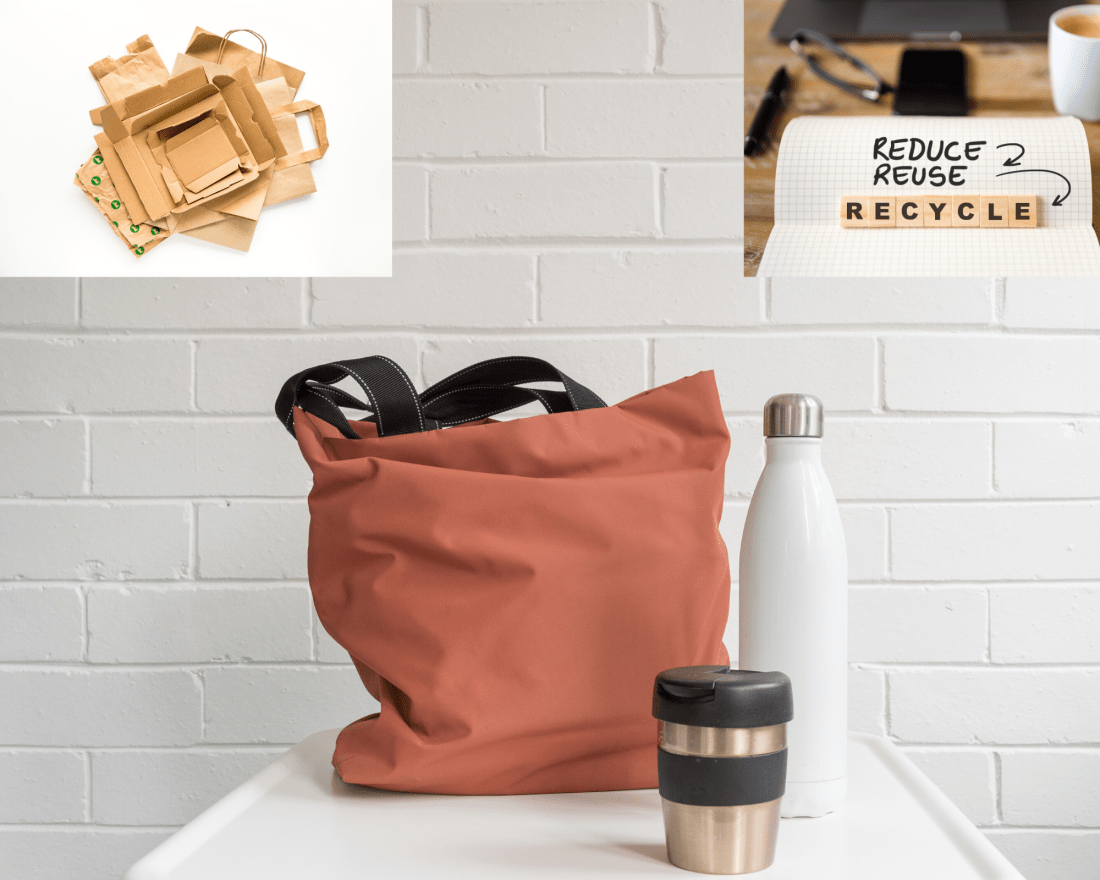
I remember Little Man being introduced to three important terms in his first or second grade homeschooling experience that educated him about the ways in which we, human beings of all ages, can function as responsible stewards of Earth and its natural resources. And those terms are reduce, reuse, and recycle.
And when I was thinking on what to share with you for today’s “Productivity Tuesday”, it dawned on me that there many little, incremental things that my family and I routinely do in a day to show how much we value this land that we inhabit, such as:
- turning off the lights in rooms that we’re not using.
- turning off the running water while we’re brushing our teeth instead of letting it constantly run during the whole tooth brushing process.
- taking shorter showers.
- walking or carpooling to help cut down on pollution.
- utilizing reusable items such as stainless steel thermoses and hard plastic water bottles instead of the throw-away plastic bottles that find their way to our landfills and bodies of water.
And this last example in the list above is representative of how my family strives to find more and more doable ways to efficiently reuse items to get the most out of them before they’re disposed of. We don’t mind reusing common household items on a recurring basis or repurposing items for use in different and innovative ways.
In addition to the stainless steel thermoses and hard plastic water bottles we reuse in our household, my family also shows productivity solidarity by reusing:
- our store-bought lunch bags instead of packing our lunches in paper sacks.
- the plastic bags, that hold our groceries, as trash bags in our little trash cans in our bathrooms and bedrooms. (One thing I’d like to start implementing in my household is purchasing the reusable bags to use for our groceries. Guess that would eliminate the plastic bags we reuse for our trash cans. Hmmmm . . . Well, it would be better for the environment if we switch over. Here’s an example of a little give and take when it comes to making incremental lifestyle changes for the better.)
- socks with holes and old shirts and pants as dusting and cleaning rags.
- old, torn sheets and pillowcases as dusting and cleaning rags.
- old, torn sheets and pillowcases as liners for drawers in bedroom dressers and chest of drawers.
- pants, jeans, and pajama bottoms that get holes in the knees (cutting off bottom part of clothing at the hole) as shorts for Little Man.
- gift bags we receive as gift bags to use for others’ presents.
- tissue paper that comes in gift bags as tissue paper to use for others’ gift bags.
- cardboard boxes, such as packing boxes, gift boxes, cereal boxes, and shoe boxes to hold small items, for mailing packages, or for Little Man’s art projects.
- old, crumpled up printer paper, construction paper, or newspaper/magazine paper for packing material for boxes or to wrap up fragile items for storage.
- toilet paper and paper towel inner rolls for Little Man’s art projects.
- containers, such as lotion pumps, hand soap pumps, shampoo and conditioner bottles, as refill bottles for common toiletry items or for Little Man’s art projects.
- older siblings’ artwork (that they no longer want) for Little Man’s art projects.
- older siblings’ school-aged books as books to fill Little Man’s library instead of always buying new books. (We’ve been able to save quite a bit in Diary of a Wimpy Kid books expenses by giving Junior’s old books to Little Man.)
- older siblings’ toys and games for Little Man’s playtime pleasure.
- Junior’s old casual clothing pieces (kept in good condition) as clothing pieces that Little Man can wear as he grows into them.
- glass jars that house the tomato products (tomato paste, tomato sauce, diced tomatoes, and salsa) that we buy from the store as drinking glasses.
- white printer paper that has been used on one side as printer paper for use on the other side or as scratch paper for note-taking or artwork.
- dry erase boards to work out Little Man’s more difficult math problems instead of always using paper.
- twist ties (initially used when bagging your produce at the grocery store) as twist ties for opened cabinet and pantry food items and packages that need resealing after use.
In reviewing the list above, it became immediately recognizable that Little Man is one of the main contributors as well as beneficiaries of our family’s reusing policy, which consists of finding sensible reuses for items that have been used before. And, Little Man is able to put into practice what he learned a couple of years ago in some social studies lessons. I love it when children (especially at a young age) are given opportunities to apply their book knowledge to real life. I believe it gives them more of an appreciation for what they’re learning and is hopefully something that will stick in their minds because they’ve had hands-on exposure to it early in life.
It may be somewhat of a stretch for others to view “reusing” as a productivity measure. However, I consider the ability to get more than a single use out of something to be a prime example of how to work in an efficient (less wasteful) manner. And, efficiency and productivity go hand in hand.
I want to conclude by emphasizing that those little things we implement in our families may seem so insignificant by others’ standards and may appear to only affect our particular family. But if you take a closer look, your family’s contributions become substantial over time. For instance, suppose your family’s small contributions toward creative resourcefulness exponentially spread to other families through word-of-mouth or by living example. Just imagine how the influence of your single family can affect multiple families’ impacts on Earth and potentially make a world of difference for society-at-large.

 degreesofmaternity.com